
Congo River Expedition Up River Mbandaka - Lisala - Kisangani and Down River Kisangani - Lisala - Mbandaka - Kinshasa
Accommodation
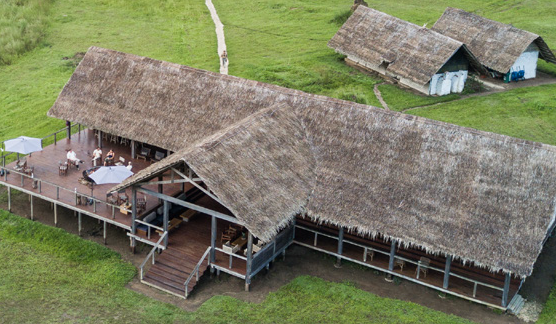
Hotels in Kinshasa, Kisangani, Mbandaka, Goma, Bukavu, Kalemie, Bunia, Lubumbashi, Matadi, Boma, Gbadolite Tented campement in the interior: Large comfortable tents 2 m high. As beds, we offer self-inflating mattresses with cotton mattress covers and pillows. Travellers are expected to bring their own towels and shampoo/soap.
Breakfast, a light Lunch and a two-course Dinner. Our breakfast is inspired on the so-called continental breakfast, including Sliced Bread and Rolls - Butter, Cheese, Ham/Salami and Jam - Sugar - Coffee, Tea. Our Lunch and Dinner consist mainly of local specialties. Fresh fruit and local snack-food are served as lunch on board. The Main Course of our Dinner consists of Meat, Poultry, Fish or Pasta - Vegetables - Rice, Potatoes or 'Foufou', a local side dish made of the manioc plant. The Dessert traditionally consists of fresh fruit.
1 $ = 2.800 Congolese Francs = (July 2024). Rates are subject to change. The Congolese Francs may not be imported, nor exported. We advise you to carry USD cash upon arrival, clean notes not damaged and no 1 USD ones. Traveller cheques are not accepted until now. Credit cards can be used only in big cities like Kinshasa.
The D.R.Congo has a surface area of 2,345,000 km² and is the largest country on the continent after Algeria (2,376,000 km²). The equator runs through the northern third of the country. The D.R.Congo is surrounded by nine other countries: to the north lies the Republic of Congo, the Central African Republic and Sudan; to the east Uganda, Rwanda, Burundi and Tanzania; to the south, Zambia and Angola. The border measures some 10,000 km. The D.R.Congo has a western gateway to the Atlantic along a 40 km coastal strip.
The climate is tropically hot and humid in the lower western and central regions, with frequent heavy rains from November through May south of the equator and from April to November in the north, whilst along the equator itself there is only one season. The higher regions of the east, though, have fairly temperate weather. Average annual temperatures are 25°C (77°F) in the low central basin and 17° to 20°C (63° to 68°F) at altitudes of 5,000 ft. Average annual rainfall in Kinshasa is 56 inches while in Lubumbashi it is 45 inches.
The D.R.Congo has about 80.000.000 people, with some 12,000,000 in Kinshasa, the capital, and 750,000 in Kisangani. The overall Average Population Growth is about 2.6%. The poulation growth in major cities is 4.3%. Forecasted Population in 2026 is 104,800,000 people. Life Expectancy is 46,7 years for men and 50,8 for women, and about 50% of the population is under 14 years old. Four main ethnic groups are distinguished in the D.R.Congo:
- • The Bantus, members of the largest tribes in Black Africa, make up more than half of the entire population of the D.R.Congo. They live dispersed in an area approximately two thirds of the country: from the north, to the border with the Central African Republic, to the southeast in Katanga.
- • The Sudanese, immigrants from the north who came between the 14th and 16th century, have settled mainly on the northern border between the rivers Ubangi and Uele.
- • The Pygmies are Congo's oldest inhabitants. The word stems from the greek pygmaios and means as big as a fist. The dwarf-size tribe (average size ca. 1.40 m) number about 200,000 members. They are exceptional hunters who are especially skilled in using poisonous arrows. The pygmies are monogamous and live in non-hierarchial family communities. • The Bambutis live mostly in the forests of the Ituri region. In addition, the Nilotens and the Hamitens are settled in the northeast and eastern Congo. Other tribes include the Baka, Babinga and the Batwa.
French is the official language in the D.R.Congo. Of the 200-odd local languages and dialects, 4 are national languages; Lingala (spoken primarily in Kinshasa and along the rivers), Kikongo (west of Kinshasa), Tshiluba (in the south and central area) and Swahili (in the east and north-east).
Valid Passport. (valid at least 6 months upon return). Visa required, apply for visas at local Consulate or Embassy prior to departure. In case of absence of Embassy or Consulate, Go Congo can apply for your visa in case of visiting the National Parks of Virunga and/or Kahuzi Biega in North or South Kivu will be issued upon arrival . International Certificate of Vaccination with proof of yellow fever vaccination is requested. For visa application, we supply a legalized ( Ministry of Foreign Affairs ) Invitation ( LOI ) and a so called “ Prise en Charge “ ( Immigration Office ) A copy of the passport and visa must be send to us by email about 7 days prior arrival.
A vaccine against yellow fever is required to enter the D.R.Congo. Furthermore, we recommend travellers to take preventive medicine against Malaria and to have themselves vaccinated against hepatitis A, hepatitis B, tetanus, polio, diphtheria and typhoid stomach fever. We advise travellers to contact their physician. We advice to use mosquito lotion based on D.E.E.T., a sun block , pet or head that covers also the neck. Please bring special water shoes with ( wet shoes that protect the whole foot ) as it can happen that you walk through small rivers. We advise travellers to drink only mineral water out of bottles or filter and cook fresh water before drinking it. The water served to travellers by Go Congo has been treated. The traveller understands and agrees that during the tour in which he/she will participate, certain risks and dangers may arise, including, but not limited to, the forces of nature, risks and dangers inherent in travel by boat/automobile/train/aircraft or other means of conveyance, and accident or illness in remote places without immediate access to medical facilities, or means of rapid evacuation and assistance. Go Congo shall not be responsible for any injuries, damages or losses caused to any traveller in connection with the above. The traveller assumes complete and full responsibility for the risks in connection to the tour in which he/she will participate. We recommend travellers to get adequate travel insurance or check the conditions with their current insurance company. A medical evacuation out of remote places can be expensive.
We recommend a bag with max 20 kg. To avoid theft this bag must have a possibility to close with a lock.